
By Jay Sweet > Original source: Jersey Jazz
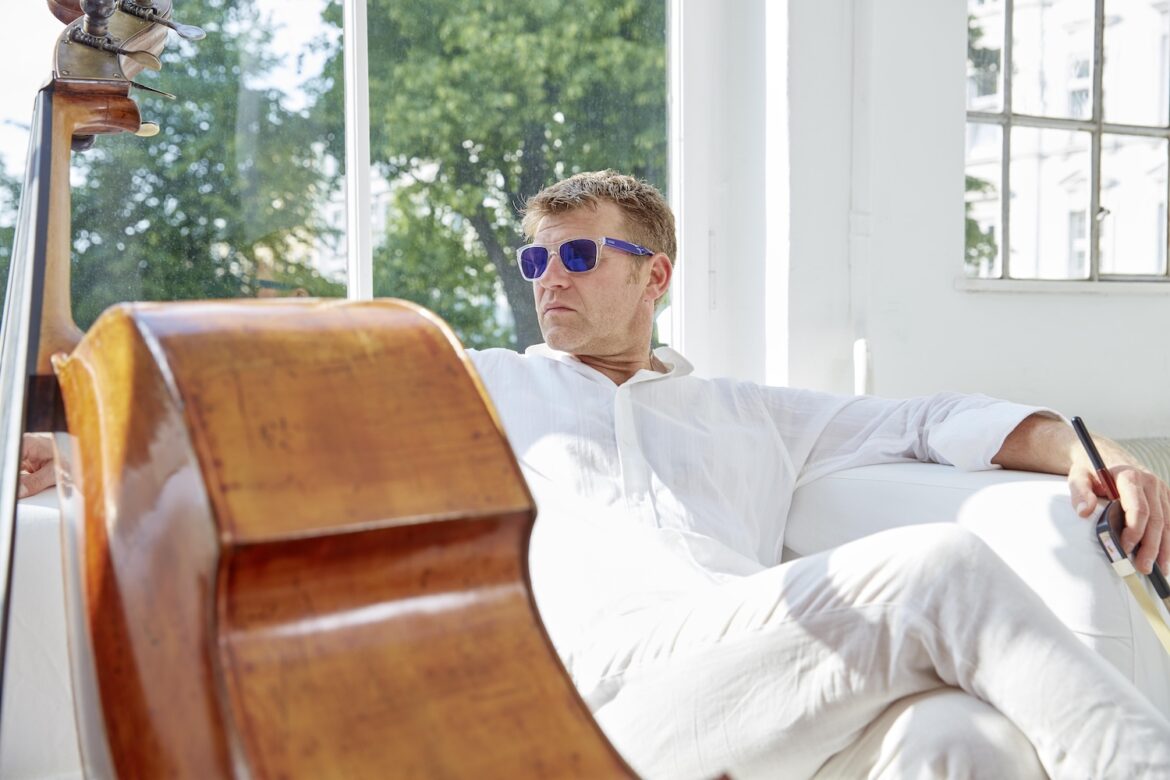
German-born bassist and composer Martin Wind has built an extensive résumé with over 20 albums as a leader or co-leader and performance credits with legends such as Buddy DeFranco, Pat Metheny, Phil Woods, Toots Thielemans, and many others. He has regularly performed at some of the top jazz venues in the world. Upcoming performances include two nights at Mezzrow in New York with Bill Cunliffe’s trio on April 3rd and 4th, as well as release concerts for his newest record September (2026, Laika Records) with his Gravity Trio and special guest Glenn Zaleski on piano—April 9 at Smalls Jazz Club, April 10 at the Puffin Cultural Forum in Teaneck, NJ, and a date at the famed Deer Head Inn in Pennsylvania on April 11. In conversation, Wind discussed the new record and upcoming performances.
“For the record September, I worked again with my two partners in crime. The tenor player is Peter Weniger—and he and I go back to the winter of 1987–88, when the National Youth Jazz Orchestra in Germany was founded. We were both part of that first lineup. He was already an established player, and I was more on the bench, so to speak. Over the years, though, we kept finding ourselves making music together again and again. I would put projects together, he would bring me to Germany, and it just kept growing.
Jonas Burgwinkel is the drummer, and he’s really one of the major voices in Germany right now. He’s maybe a decade and a half younger than Peter and me, but he’s already a professor at the conservatory in Cologne. He’s played with people like Chris Potter, John Scofield, and Fred Hersch—musicians from the U.S. who seek him out when they’re touring in Europe.”
A few years ago, the trio gathered in Berlin, where Weniger directs the Jazz Institute, and recorded their first album, Gravity (2023, Laika Records). “At the time, I wasn’t sure if it would be Peter’s record or more of a collective effort, but I eventually decided to release it under my name. We toured quite a bit, including opening the Jazz Baltica Festival in my home state of Schleswig-Holstein. After living with that format, I wanted to revisit it—this time writing specifically for the band.”
For the new project, Wind expanded the palette. “I also invited reeds specialist Scott Robinson as a special guest. He’s a close friend here in Teaneck, and we’ve played in each other’s groups for years. I thought it would be interesting to bring together my European collaborators and my American counterpart and just let those worlds interact.”
One of the defining elements of the Gravity Trio is its chordless format—saxophone, bass, and drums. Wind is not the first to explore this setting; notable recordings include Sonny Rollins’ Way Out West (1957), Joe Henderson’s State of the Tenor (1985), Branford Marsalis’ Trio Jeepy (1988), Joe Lovano’s Trio Fascination (1997), Fly’s Fly (2004), and Joshua Redman’s Back East (2007). The format presents both freedom and responsibility for the bassist.
“In a chordless trio, what we love is the freedom to react harmonically. There’s no guitar or piano locking us into a fixed framework. I start thinking more in terms of counterpoint rather than just outlining chords. That’s the thrill—you can reshape the harmony in real time. But that freedom comes with a challenge. You have to be intentional so the harmony is still clear to the listener. At the same time, you want an open, resonant sound on the bass, which often leads to more ‘bass-friendly’ keys. Some tunes fall naturally into that—like ‘King of the Castle’ in E. That’s not a particularly horn-friendly key, so you need players who are comfortable there. It’s a different way of playing—and a different way of listening.”
When it comes to writing, Wind moves fluidly between approaches. “I write in different ways. ‘King of the Castle’ was written on the bass—I wanted something that really resonated on the instrument. But sometimes I write at the piano, and sometimes away from any instrument. That’s something I learned from Kenny Werner—writing without trying to hear everything in advance. I might generate material almost randomly, then later sit at the piano and see what resonates. From there, I shape it into something intentional. So I have different compositional modes—different entry points depending on what I’m trying to discover.”
The conversation then turned to Wind’s early development.
“My first instrument was guitar. I remember sitting in a circle with about ten people playing ‘He’s Got the Whole World in His Hands.’ It only had two chords—E and B7. The E was easy, but it would take five or six seconds for everyone to get their fingers into B7 before we could continue. I was about 12.
At 15, my band director asked if I’d play electric bass in the big band. I said yes, thinking it was temporary—but I never looked back. I studied with Elmer Turnage, who had me working through a Simandl book—even on electric bass—which is how I learned to read. Eventually, I switched to upright, especially since a small bebop group didn’t want electric bass. Within a few months, I was playing in both the big band and orchestra. That shaped everything—I never saw classical and jazz as separate worlds.”
Wind went on to study at the conservatory in Cologne with Wolfgang Güttler, a former Berlin Philharmonic bassist under Karajan. “He taught me everything—not just technique, but how to think like an artist.” After completing his studies, Wind received a scholarship to NYU. “It was a small program at the time. My connection was bassist Mike Richmond—we met through the National Youth Jazz Orchestra. He told my wife and me to move to Teaneck, and we did. At 28, I focused less on technique and more on composition, arranging, and repertoire—and especially listening. That was the biggest difference I noticed with American musicians—their ability to react in real time.”
He quickly found his footing in New York. “I started playing small gigs, got recommended around, and began teaching non-majors in my first semester. Around that time, my first son was born, so those years were intense—but amazing.” Among his most important mentors was pianist Bill Mays. “He would fax me lists of tunes I needed to learn—really pushing me—and then recommended me once I got to New York.”
Another key influence was Jim McNeely. “He would occasionally put up a sign-up sheet for lessons at NYU. Not many people took advantage of it, so I did. We’d play duo, talk arranging, go over my music—it was incredible. Through him, I got recommended to play with the Vanguard Jazz Orchestra.” Wind also credits Kenny Barron, with whom he recorded his previous release Stars (2026), for a lasting piece of advice: “Don’t put things off. If you have something to say—make it happen.”
Martin Wind’s profile rose significantly after placing third in the 1995 Thelonious Monk Competition.
“I have to mention John Clayton—a huge mentor and friend. I met him in 1989 at Centrum Jazz Camp. He doesn’t believe in competition, but he still helped me prepare. I also worked with Jeff Hamilton, who helped me with repertoire. That competition introduced me to the U.S. scene. I played in front of Milt Hinton, Ron Carter, Percy Heath, Charlie Haden, and Christian McBride—an unbelievable jury. The guitar competition was happening at the same time, so I also played in front of Pat Metheny, John Scofield, Jim Hall, Pat Martino, and Mark Whitfield. Everyone was there—Clark Terry, Wynton Marsalis, Herbie Hancock. It was incredible.”
One of Wind’s career highlights was his annual work with the Kennedy Center Honors Orchestra, which has since been halted due to recent and “unfortunate” institutional changes.
“I got involved through Chris Walden, a friend from Cologne who became a major arranger in L.A. He recommended me when they needed someone who could handle both orchestral and big band work. The musical director was bassist Ricky Minor. I did it for six or seven years. One of the highlights was being part of Aretha Franklin’s ‘Natural Woman’ performance—the one where she drops the fur coat. I was in the orchestra behind the curtain. We also performed with artists like Renée Fleming, John Legend, and many others. There’s even a moment where I’m onstage with Dianne Reeves. I really loved those weeks. We’d head down to Washington midweek, rehearse intensely, and then have some downtime—I’d walk the Mall, visit museums, and we stayed in a great spot near Georgetown. It was a real treat—and I do miss that experience.
Looking ahead, Wind shows no signs of slowing down.
“Starting tonight I’m at Birdland for five nights with Anat Cohen, Matt Wilson, and Gary Rissmiller. Then I head to Germany for the September release tour. I’ll also be in Graz, Austria, working with bass students. They have a ‘bass night,’ and we’ll perform my arrangements. That’s something I’ve developed through my teaching at Hofstra University, where I started a bass ensemble. We’ve done pieces like ‘Yardbird Suite,’ and last year I completed an arrangement of Beethoven’s Fifth Symphony for bass ensemble, which we performed at the ISB Convention in Tallahassee.”
Martin Wind continues to build a body of work rooted in tradition, exploration, and collaboration—moving fluidly between continents, ensembles, and roles. Like his name suggests, his career doesn’t stand still; it shifts direction when needed, but always carries the music forward while continuing to connect to the jazz’s rich past.